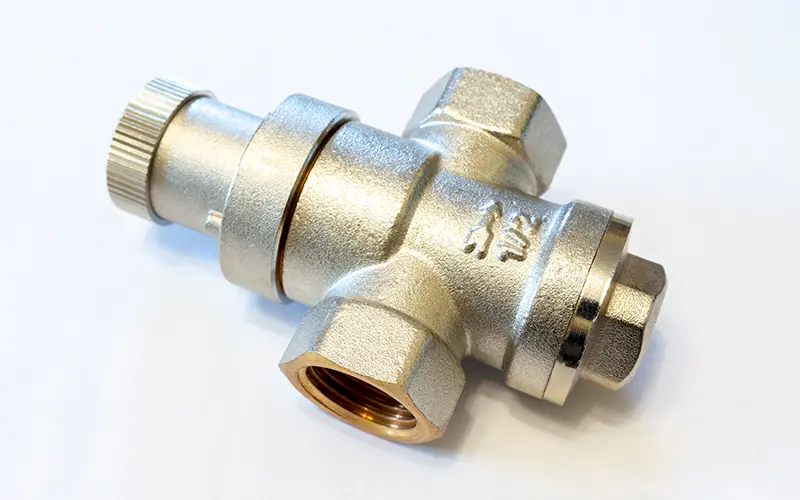
ClearFlo Plumbing Services helps homeowners throughout Greensboro, NC, Asheboro, NC, High Point, NC, and Winston-Salem, NC diagnose and resolve these issues with dependable pressure reducing valve replacement. This guide explains what a PRV does, the warning signs of failure, and how professional replacement can restore safe, consistent water pressure to your home.
Signs Your Pressure Reducing Valve May Need Replacement
Many homeowners don't realize a PRV issue is behind their plumbing problems until symptoms become hard to ignore. Recognizing these signs early can help you avoid more extensive damage and costly repairs.
High water pressure throughout the home: Your faucets and showerheads may feel unusually strong or cause water to splash excessively.
Low or inconsistent water pressure: Pressure drops or fluctuates without any clear reason or warning.
Banging or knocking pipes: You may hear loud thumping sounds caused by pressure surges, commonly known as water hammer.
Leaking pipes or fixtures: Leaks appear, particularly at joints or connections that are under stress.
Frequent plumbing repairs: Recurring issues may point to an underlying pressure problem rather than a series of unrelated faults.
Noticeable changes in water pressure: Pressure shifts that seem to coincide with weather changes or nearby municipal work.
If you're experiencing more than one of these symptoms, it's worth having your PRV inspected before the problem escalates.
What Is a Pressure Reducing Valve and How Does It Work?
A pressure reducing valve is installed on the main water line where it enters your home, typically near the water meter. Its job is to regulate incoming water pressure from the city supply, which can often exceed 100 psi, down to a safer level, usually between 40 and 60 psi. This regulation matters because plumbing fixtures, pipes, and appliances are built to handle a specific pressure range, and anything above that can cause premature wear or sudden failures.
When a PRV works correctly, it protects your entire plumbing system, from water heaters to washing machines to copper piping. Over time, however, the internal components of a PRV can wear down due to mineral buildup, age, or constant fluctuations in municipal water pressure. This gradual wear is why PRV replacement eventually becomes necessary for most homes, regardless of how well the system was maintained.